Subsurface Oxidation or Fire at a Landfill
On August 20, Bloomberg Businessweek published an analysis of public records from more than 100 landfills in 20 states. Their review found that 20 landfills, including Arbor Hills, have reported or requested permission to operate with gas well temperatures of 170°F or higher. These elevated temperatures can destroy a landfill's pollution-control liners, trigger catastrophic slope failures, increase foul leachate, and release airborne carcinogens such as benzene.
The dangerously elevated temperatures are yet another reason for Washtenaw County officials to carefully review all the evidence before considering GFL’s proposal to build a new landfill in Salem Township. With over 23 years of existing landfill capacity in Michigan, the proposed new landfill is unnecessary and outright dangerous.
The elevated temperature issue is complex and requires detailed analysis of wellhead data (temperature, chemical composition, gas flows, etc.) from hundreds of wells. State agencies may not have resources to adequately investigate. The Conservancy Initiative has partnered with a data scientist to conduct a detailed analysis of publicly available data and will publish a summary of the findings. Our review has prompted EGLE to alert GFL that a comprehensive review of well data dating back to 2020 has been opened.
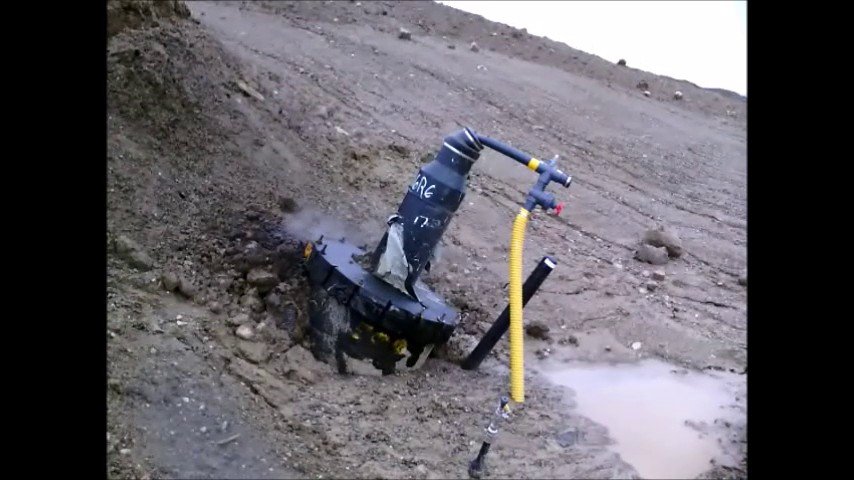
Figure 1 - Aug 2022 - Photo of a hot well, located in an area of subsidence. Puddling liquid is likely leachate containing toxic chemicals including PFAS. Note the gas pipe at top has bent (melted?) approximately 90 degrees.
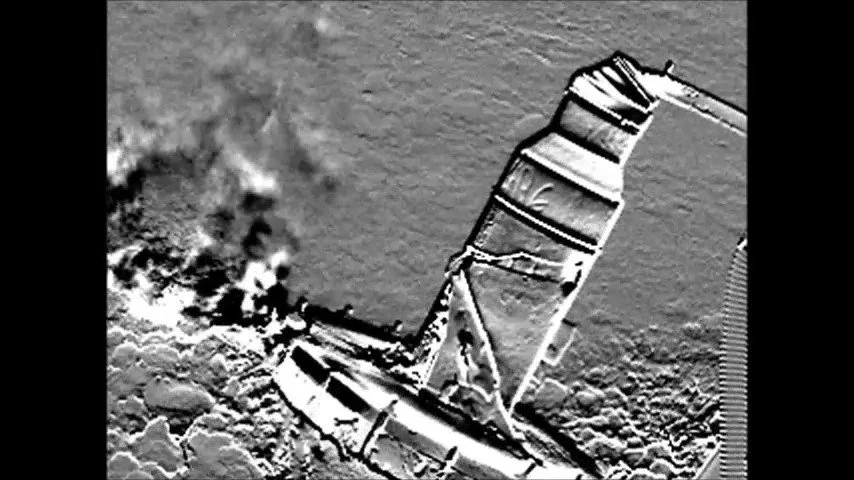
Fig 2 - August 2022 - Optical gas imaging recorded hydrocarbon emissions around the Arbor Hills gas well in an area of subsidence and pooled leachate. White areas are hot, and dark areas are cool.
Note: Temperatures high enough to damage wells, leaking methane gas, and seeping leachate are dangerous conditions.
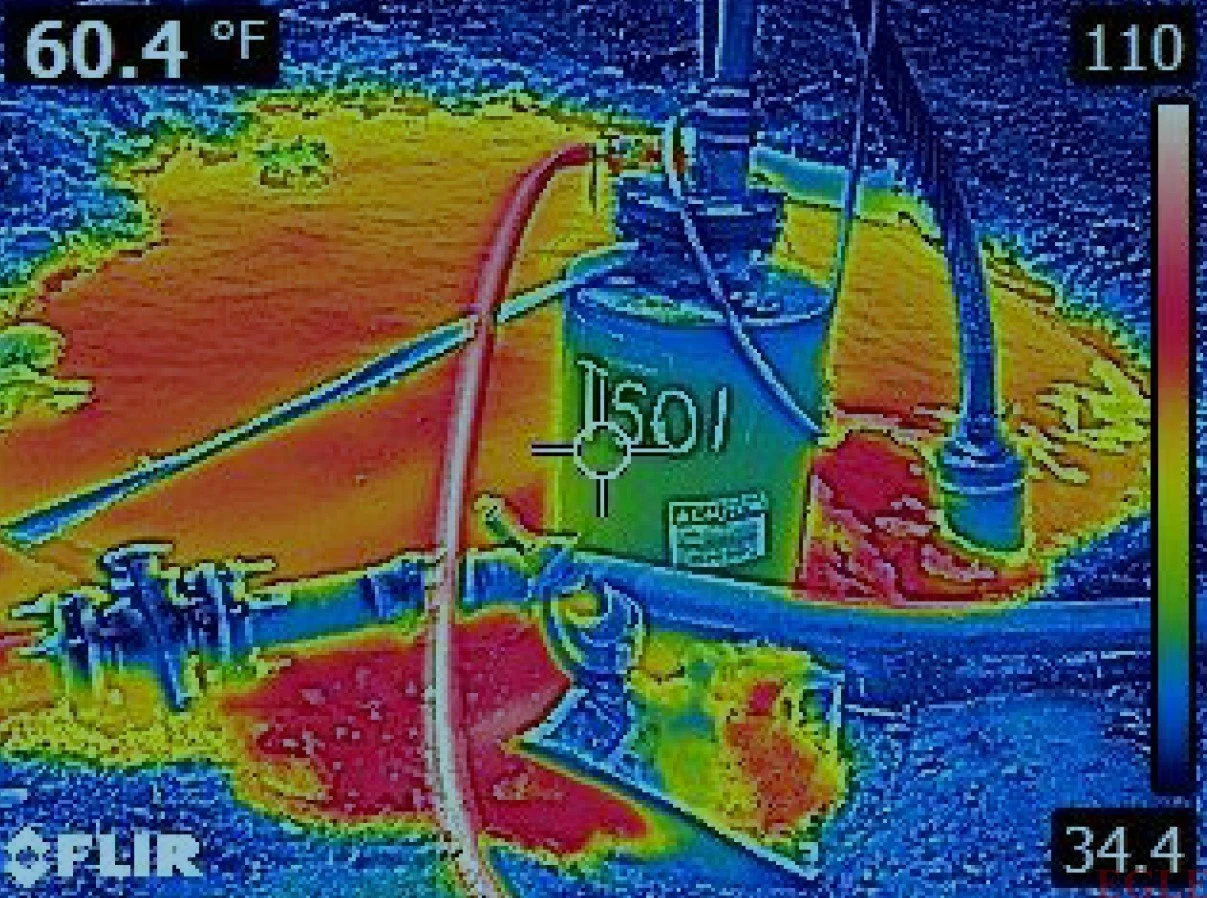
Two videos of this well are available. Both of these videos were recorded in August 2022. EGLE Air Quality Division inspection reports noted ground temperatures up to 135°F and methane concentrations of 5000 ppm. Methane leakage is likely the source of the bubbling in the seeping leachate puddles. Infrared video of failing well Video of bubbling leachate
Playing with Fire: The Hidden Landfill Crisis
Bloomberg Businessweek and Full Circle Future, an environmental advocacy organization, are spotlighting a dangerous, systemic flaw in modern landfills. They found that municipal landfills are experiencing a severe "hot garbage problem," in which the buried waste mass reaches temperatures of 200°F or higher. This extreme heat triggers dangerous, localized environmental and public health crises.
The investigation relied substantially on public records gathered by Full Circle Future, an environmental advocacy organization investigating overheating landfills across the country. Full Circle Future is now partnering with The Conservancy Initiative to examine the Arbor Hills record and press for stronger, more transparent oversight.
Large landfills trap methane from decaying trash and capture it through pipe and well networks to generate revenue. The gas collection system draws gas from decaying waste. If a landfill is not properly operated, the system may draw oxygen deep into the decaying mass of subsurface waste, resulting in spontaneous combustion. This is a complex issue, involving oxygen entering the landfill and unknown conditions within the decaying waste buried hundreds of feet deep. Landfill operators, regulators, and community leaders need to pay attention to avoid conditions that exist at a California landfill.
2019 Red Flags at Arbor Hills
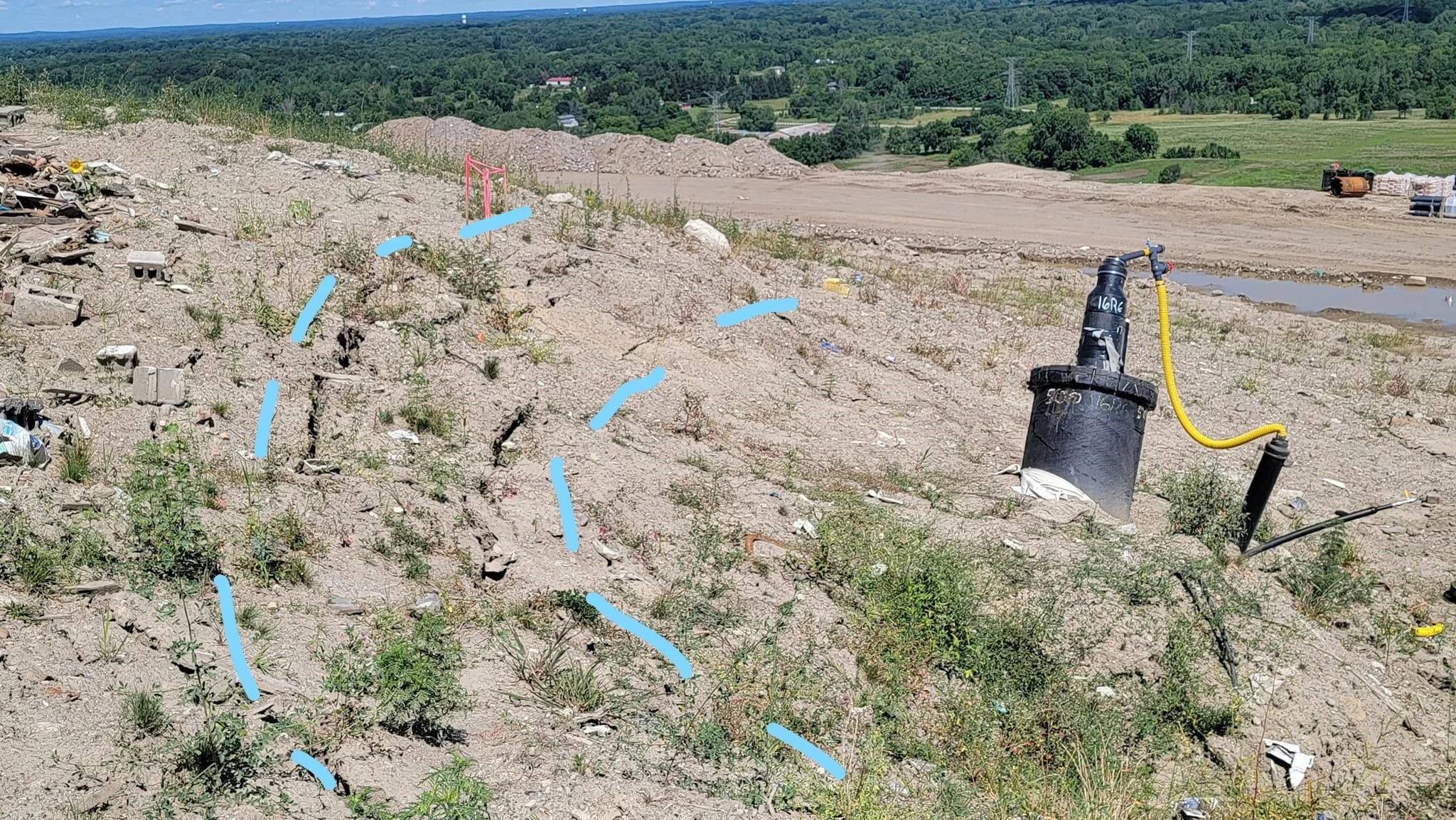
Figure 3 - Cracks in the landfill cover can allow oxygen to infiltrate the buried, decaying trash below. This cracking should be a red flag and should be addressed quickly.
This isn't an abstract national issue. It is a reality in our backyard at the Arbor Hills Landfill in Salem Township. The conditions detailed in the national reports from Bloomberg and Full Circle Future are present at Arbor Hills right now. In April 2019, state inspectors with the Michigan Department of Environment, Great Lakes, and Energy (EGLE) conducted an unannounced inspection at Arbor Hills and found what they called an "Elevated Temperature Landfill" (ETLF) event that was actively crippling the site's gas collection system. EGLE documented a deep subsidence (a cave-in) and expressed a strong belief that oxygen intrusion had ignited a dangerous subsurface fire.
Instead of forcing the operator to fix the underlying heat crisis, regulators began rubber-stamping paperwork waivers. Regulators consistently approve Higher Operating Value (HOV) requests, with few requirements, allowing individual gas wells at Arbor Hills to operate at 180°F—a staggering 35 degrees above the federal standard of 145°F.
Gaslighting from the Waste Industry
The waste industry and regulators avoid the F-word, FIRE, and heavily favor sanitized acronyms like "ETLF – Elevated Temperature Landfill" or "subsurface reaction" to insist that, because there are no visible flames, a fire isn't occurring. But independent engineering experts call this semantic game pure gaslighting. Subsurface landfill reactions are flameless, smoldering chemical events that bake the garbage from the inside out.
This issue should not be downplayed or ignored. Environmental regulators and landfill operators may need external expertise and resources to diagnose and correct these issues. In many cases, responses to subsurface fires rely entirely on surface-level wellhead data. As national investigations point out, looking only at the wellhead is like checking for a house fire from the mailbox.
Landfill gas naturally cools as it travels up a pipe. At California's Chiquita Canyon landfill, deep-internal testing revealed that the trash mass was more than 100°F hotter than the surface temperature. At 170°F, standard biological waste decomposition completely breaks down. When EGLE allows Arbor Hills wells to operate at 185°F based on surface-level temperatures, they are flying completely blind to the true magnitude of the high subsurface temperatures and potential reactions, including fire.
The Crisis is Ongoing
Despite a massive 2022 court settlement over rampant odor and leachate violations, the hot subsurface temperature problems at Arbor Hills have persisted. The issues are concentrated on the landfill's north side, the same area where GFL wants to build its new landfill.
Between 2022 and 2024, the company was forced to abandon 21 gas wells that failed because of high temperatures and drill 20 replacement wells. By early 2025, wellhead temperatures spiked to 177°F, carbon dioxide levels climbed, and methane content in the gas fell to less than 10% (landfill gas normally contains up to 50% methane). These are textbook chemical fingerprints of an active subsurface fire. Something is burning in that mountain.
Yet despite these flashing red lights, EGLE recently approved GFL's requests to operate 16 wells at temperatures above the normally allowed limits, in some cases up to 180°F.
Today, observations confirm the symptoms are still leaking to the surface:
🔥 Hot gas wells indicating intense, unchecked underground reactions.
💧 Forceful leachate outbreaks seeping heavily through the engineered landfill cover.
📉 Hollowed-out areas of subsidence and visible ground cracks charring the waste.
Washtenaw County Must Draw the Line
GFL Environmental has proposed building a new landfill on the north side of the site. If approved, the new landfill will impact Northville for decades. The Washtenaw County Materials Management Planning Committee must stand with families and block this request.
First, this expansion is unnecessary. A state-level EGLE capacity review confirmed that Michigan already has more than 23 years of remaining landfill capacity. We do not need to turn our local landscape into a dumping ground just to pad corporate balance sheets.
Second, it is unacceptably dangerous. Granting a new, heavy-waste footprint immediately adjacent to an active, unstable subsurface chemical event is an engineering disaster waiting to happen. Subsurface reactions destroy a landfill's pollution-control liners, trigger catastrophic slope failures, increase foul leachate sevenfold, and release airborne carcinogens such as benzene.
Washtenaw County cannot afford to wait for a full-blown environmental disaster to act. Local officials must protect our community by rejecting GFL's proposed new landfill. Force GFL to safely extinguish the crisis smoldering beneath our feet.