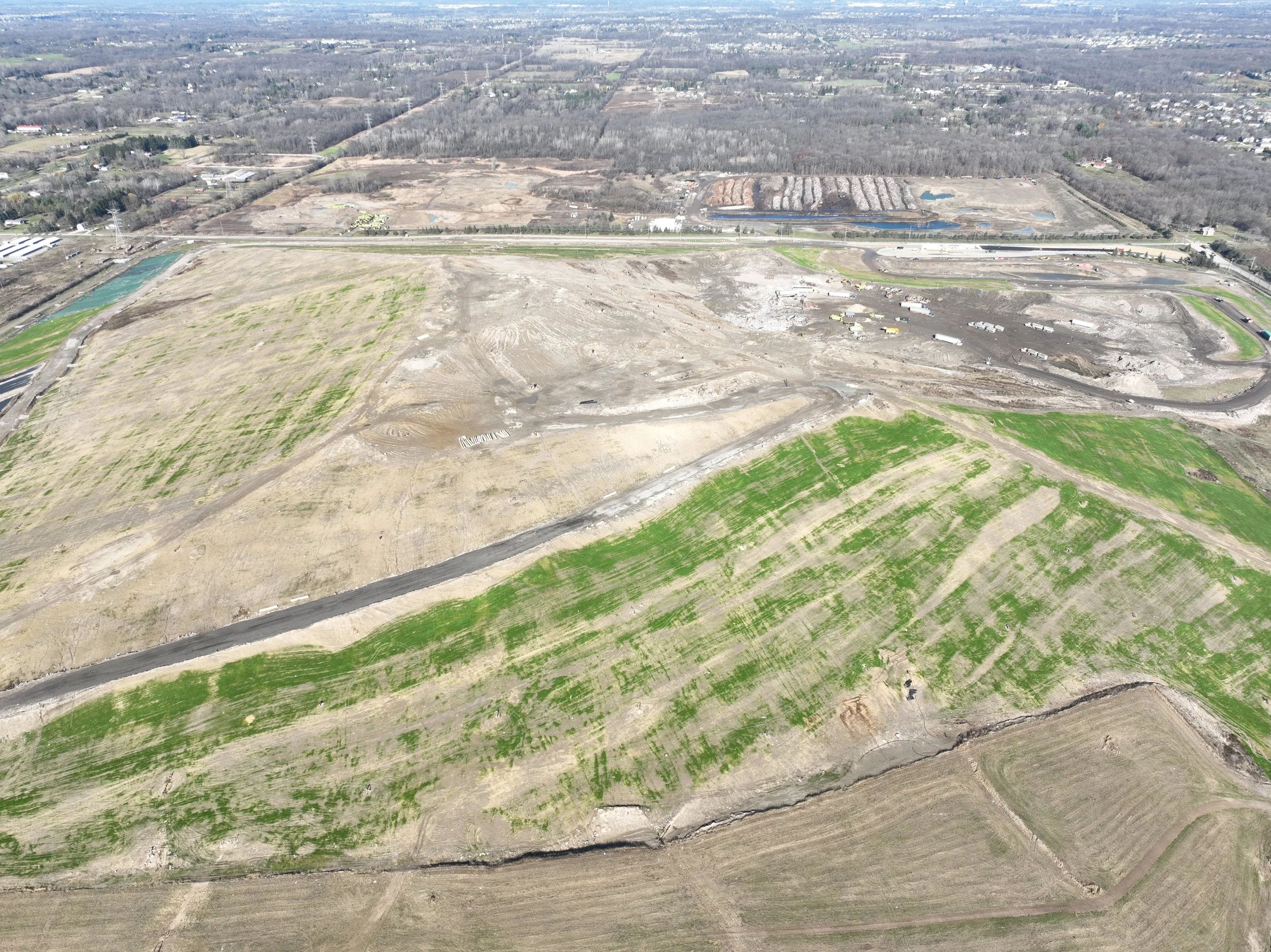
Washtenaw County is considering allowing decades of additional waste disposal at Arbor Hills. Before doing so, decision makers should ask a basic financial question: If future contamination occurs, who ultimately pays?
That risk is not theoretical. In Virginia, the private operator of the Shoosmith Landfill went bankrupt. Officials now estimate $173 million will be needed for closure and post-closure care through 2056, while only $19.3 million in financial assurance bonds were available. Virginia taxpayers have already been asked to help fund the response. At the Shoosmith landfill, a subsurface landfill fire contributed to the bankruptcy. This is a blueprint of what could happen at Arbor Hills, which already exhibits the textbook chemical fingerprints of active underground combustion
The regulatory landscape has also changed dramatically. In 2024, the EPA designated PFOA and PFOS as hazardous substances under the federal Superfund law and established enforceable drinking-water limits of just 4 parts per trillion for each chemical.
That matters enormously at Arbor Hills.
EGLE has already found PFAS above Michigan criteria in landfill groundwater, and a recent violation reported 18,000 ppt of PFOS and 30,000 ppt of PFOA in a landfill leachate sample; significantly higher than allowed levels. Arbor Hills has also been subject to state enforcement, a Consent Judgment, and a later Consent Order following a leachate release.
Washtenaw is therefore being asked to approve decades of additional disposal at a facility with known PFAS contamination and a documented history of environmental problems, despite the fact that Washtenaw does not need this additional landfill capacity to manage its own waste.
Before taking that unnecessary risk, decision makers should answer one question:
If tomorrow’s cleanup obligations cost tens or hundreds of millions of dollars, who pays?