
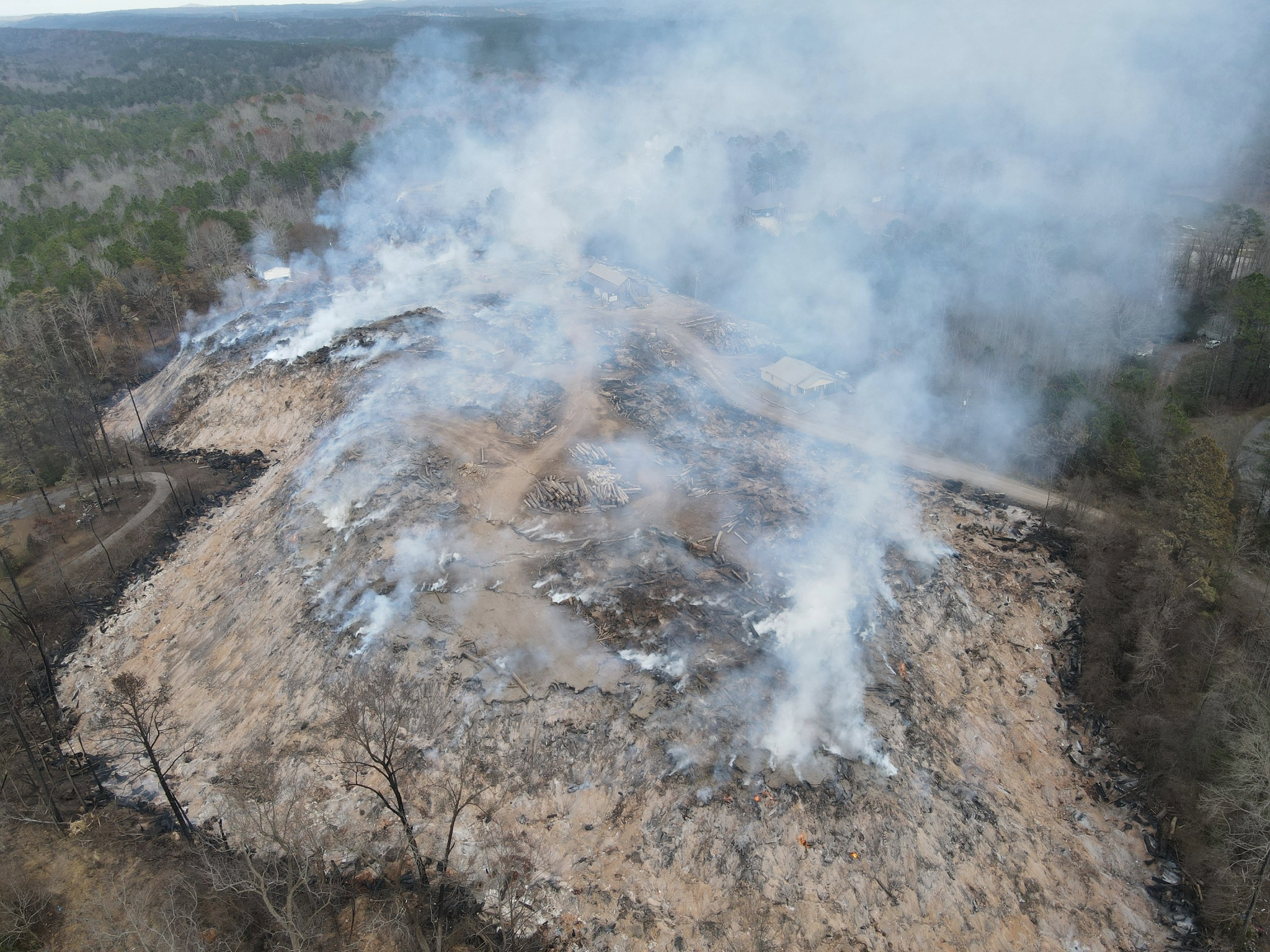
Lessons from Other Communities with Overheating Landfills
Subsurface landfill fires and Elevated Temperature Landfill (ETLF) events are not unique to Arbor Hills. Across the United States, when operators fail to contain shifting underground gas chemistry early, the resulting structural, health, and financial collapses follow a terrifyingly predictable pattern.
Shoosmith Landfill (Virginia) – The Taxpayer Meltdown & Bankruptcy:
In 2023, underground temperatures at this site began surging out of control, eventually spiking to 194°F—hot enough to cause instant third-degree burns. The severe heat degraded the waste mass, lowering methane levels while triggering a massive surge of toxic, pressurized "black goo" leachate that clogged critical infrastructure. After illicitly discharging untreated wastewater and falsifying environmental compliance records, the out-of-state investment owners filed for Chapter 11 bankruptcy and walked away. The facility now faces an estimated $173 million in cleanup and closure liabilities over 30 years, leaving local taxpayers exposed to a massive financial shortfall.Chiquita Canyon Landfill (California) – The Public Health Crisis:
An intense underground reaction rapidly spread through this facility, causing severe slope warping that threatened a catastrophic avalanche of garbage. The boiling subsurface temperatures released heavy, toxic gases and a massive surge of contaminated liquid leachate. Nearby residents have suffered from chronic nausea, dizziness, and debilitating respiratory issues, resulting in thousands of formal health and environmental complaints.Bridgeton Landfill (Missouri) – The Multi-Million Dollar Nuisance:
An underground fire smoldered unchecked for years, thoroughly destroying the surrounding neighborhood's quality of life. The resulting toxic odors forced local property values to plummet and triggered a massive class-action lawsuit. The disaster ultimately ended in a $16 million state settlement for environmental damages—on top of the operator burning through more than $200 million in desperate, late-stage engineering fixes.Chrin Brothers Landfill (Pennsylvania) – The $20 Million Infrastructure Collapse:
When internal landfill temperatures spike, they can easily melt the thick plastic geomembrane liners engineered to keep toxic liquids from poisoning the water table. At the Chrin Brothers site, an unresolved subsurface breakdown led to a catastrophic landslide that sent thousands of cubic yards of liquefied garbage sliding 80 feet downhill. The collapse tore the facility's safety systems to shreds and cost a staggering $20 million just to clean up and investigate.
Unfortunately, there are more examples.